Morse code is a classical yet powerful system that converts letters and numbers into short and long signals known as dots and dashes. Each symbol has its own unique pattern, which makes it possible to transmit messages through sound, light, radio signals or physical taps.
To begin with, learning Morse code starts with individual letters. The letter A is one of the first symbols introduced in Morse code and is represented as a dot followed by a dash: · −. To hear or verify the short-long rhythm, try it in the Morse audio translator.
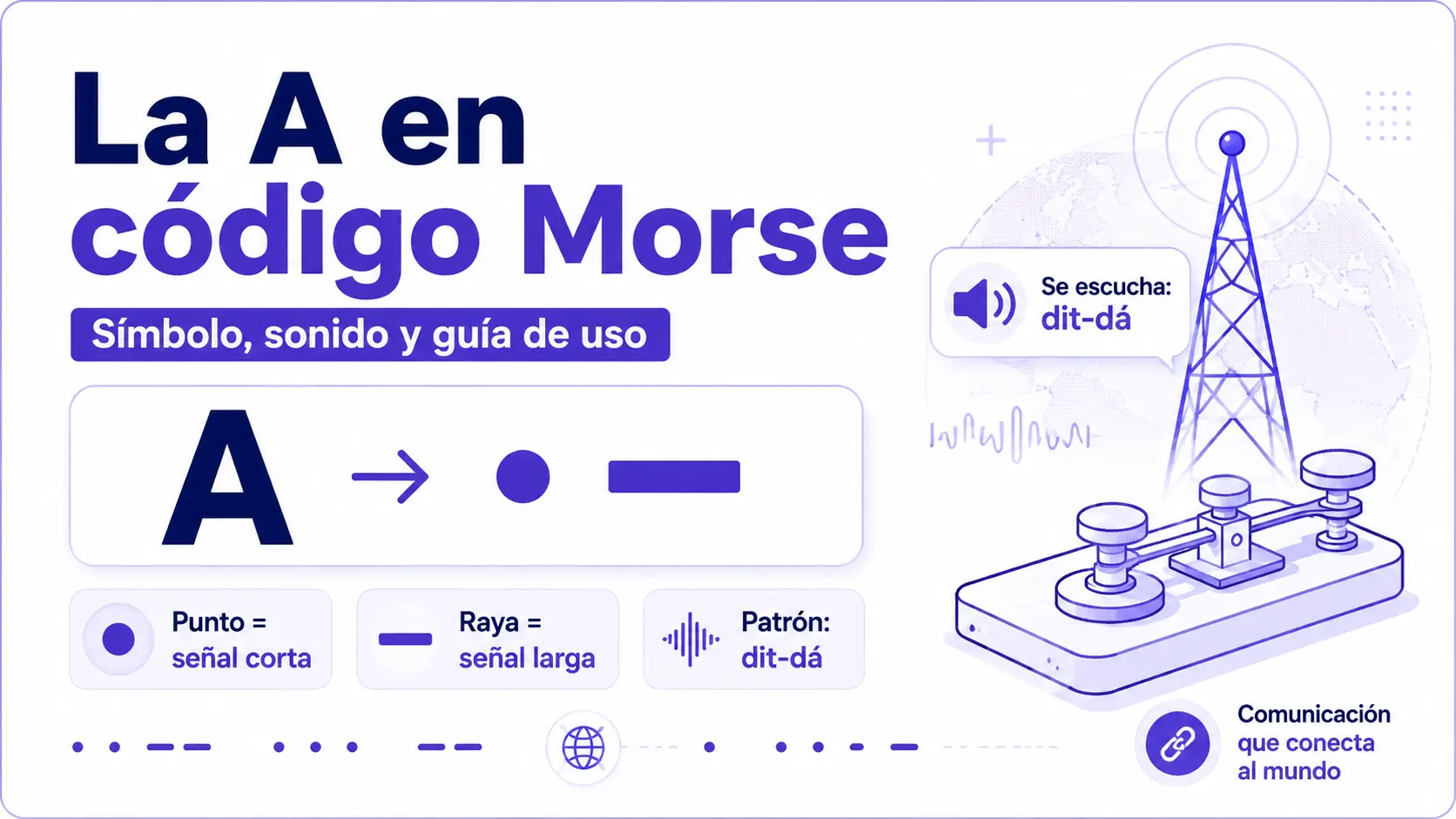
What Is A in Morse Code?
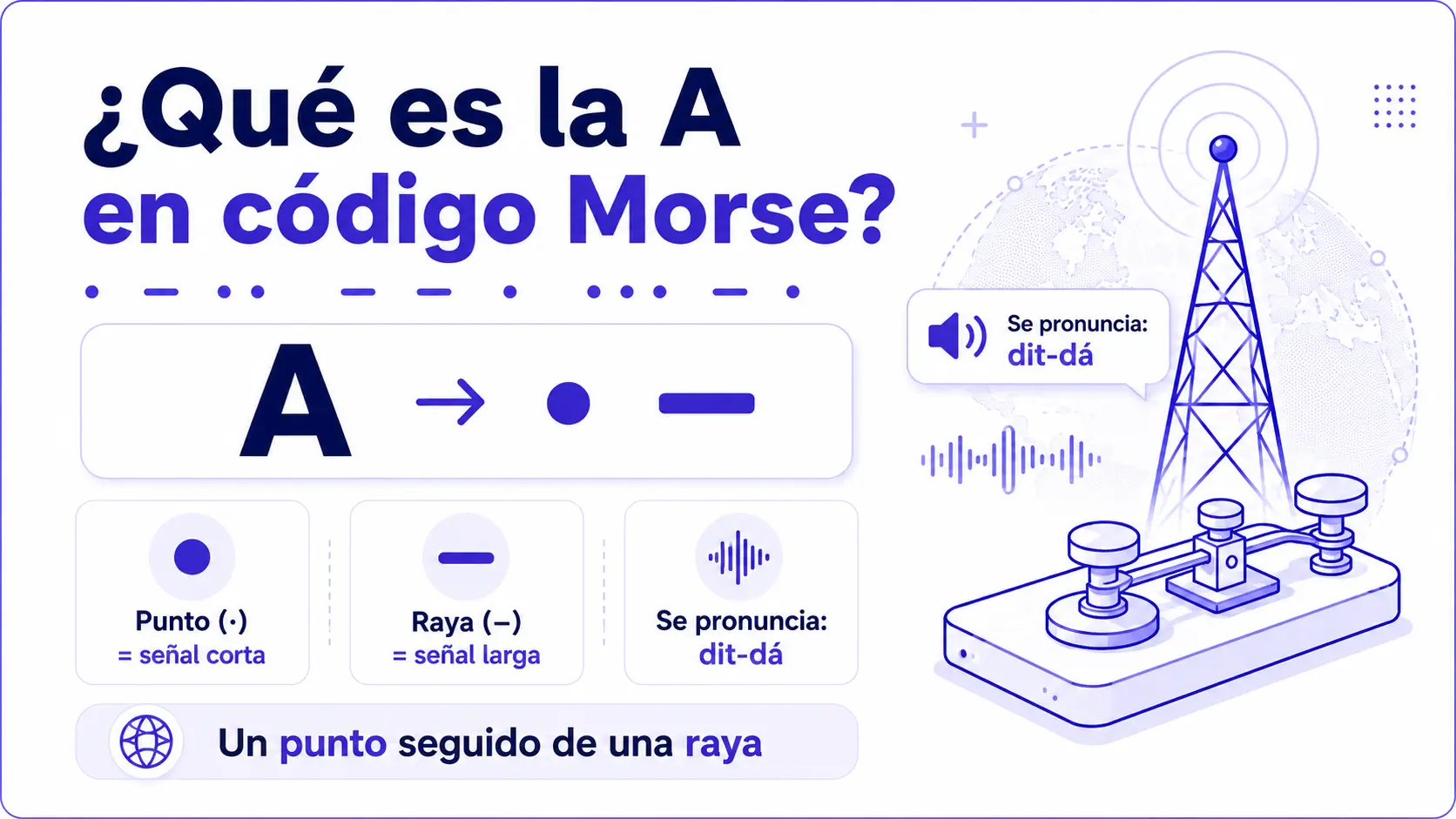
In International Morse code, the letter A is represented as:
A → · −
- The dot (·) is a short signal.
- The dash (−) is a long signal.
- A is pronounced as dit-dah.
This simple structure makes A one of the easiest letters to recognize for beginners. It combines the two core Morse elements in the correct order: short first, long second.
How to Write A in Morse Code?
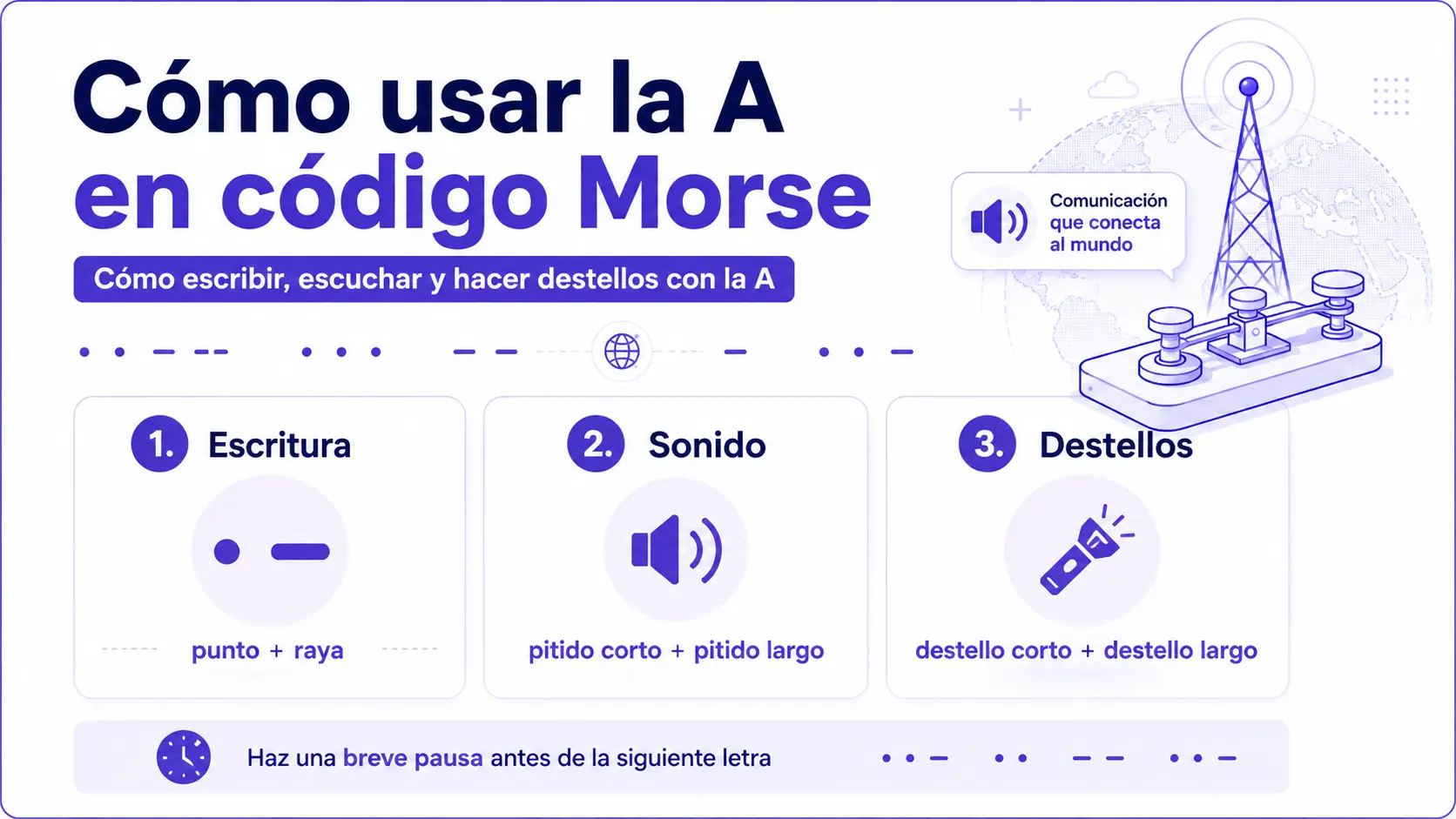
1. Writing
Write the letter A as a dot followed by a dash: · −. The dot is a brief pulse, and the dash lasts approximately three times as long as the dot. Keep the order clear so the character is not confused with another pattern.
Example: A B C is written as · − | − · · · | − · − ·.
2. Sounding A
With a buzzer or practice app, make a short beep for the dot and a longer beep for the dash. Say the pattern as one connected rhythm: dit-dah. Add a short pause before moving to the next character.
3. Flashing A
With a torch, LED or flashlight, use a short flash for the dot and a longer flash for the dash. Consistent timing is important for clear recognition in visual signaling.
Why Is A Important in Morse Code?
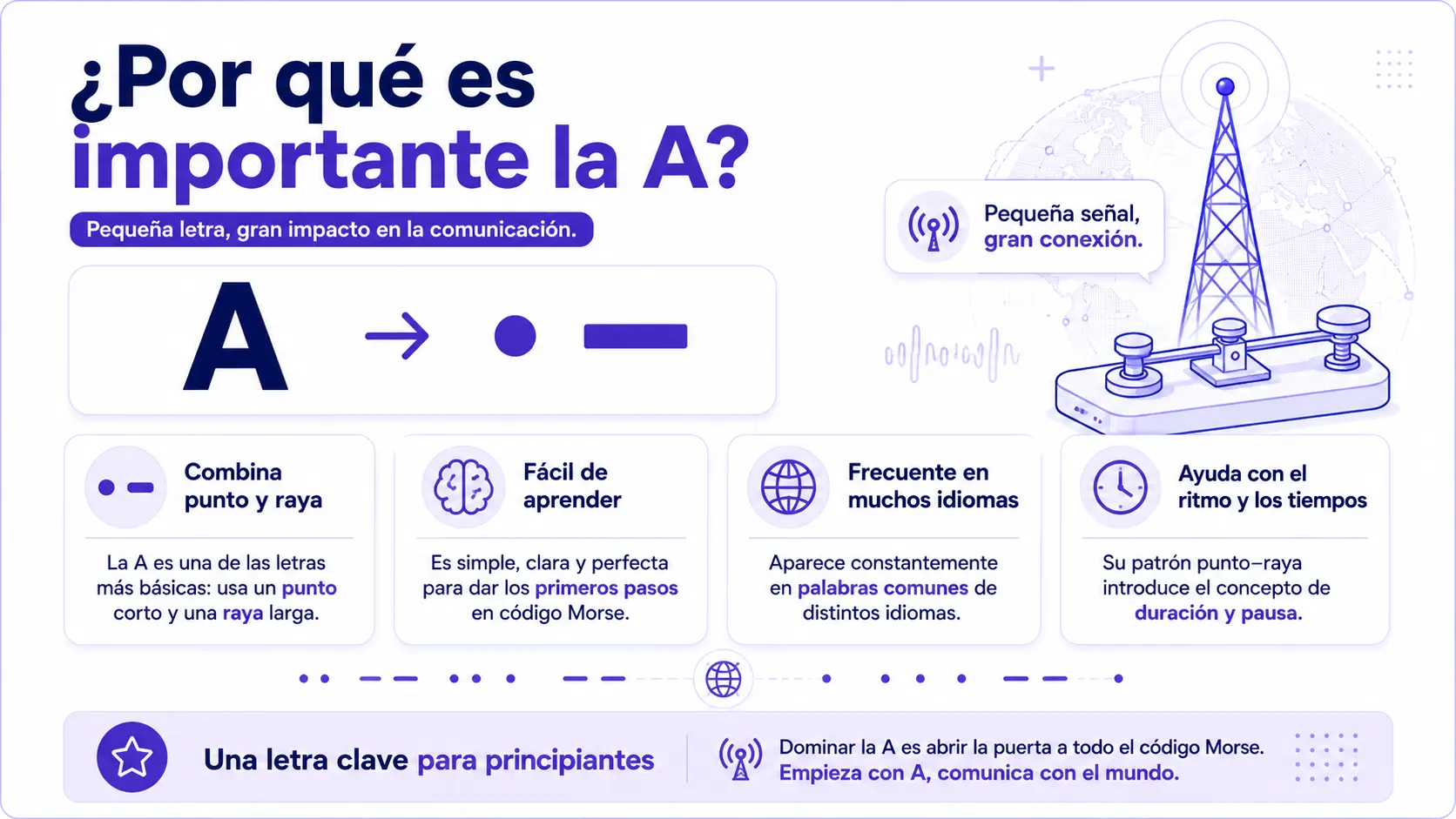
The letter A plays a crucial role in Morse learning and communication:
- Combines core signals: A uses both a dot and a dash.
- Easy to learn: It is short, memorable and one of the first alphabet letters.
- High frequency: It appears in many English words, making it practical for real communication.
- Builds speed and timing: It teaches the short-long rhythm that learners need for other letters.
Many instructors teach E (·) and T (−) before A (· −) because A combines both elements into one pattern.
How Does the Letter A Look in Morse Code?
| Letter | Morse Code | Audio Pattern | Timing |
|---|---|---|---|
| A | · − | dot – dash | short, long |
Beginners often memorize A by imagining a short blink followed by a long blink, or a quick tap followed by a longer tap.
Examples of A in Morse Code
A appears in many common words. Practice these short examples with our Morse Code Translator and listen to the rhythm.
| Word | Morse Code | Sound |
|---|---|---|
| AND | · − / − · / − · · | dit-dah dah-dit dah-dit-dit |
| ARE | · − / · − · / · | dit-dah dit-dah-dit dit |
| AT | · − / − | dit-dah dah |
| ALL | · − / · − · · / · − · · | dit-dah dit-dah-dit-dit dit-dah-dit-dit |
| AID | · − / · · / − · · | dit-dah dit-dit dah-dit-dit |
A in Morse Code: Timing Breakdown
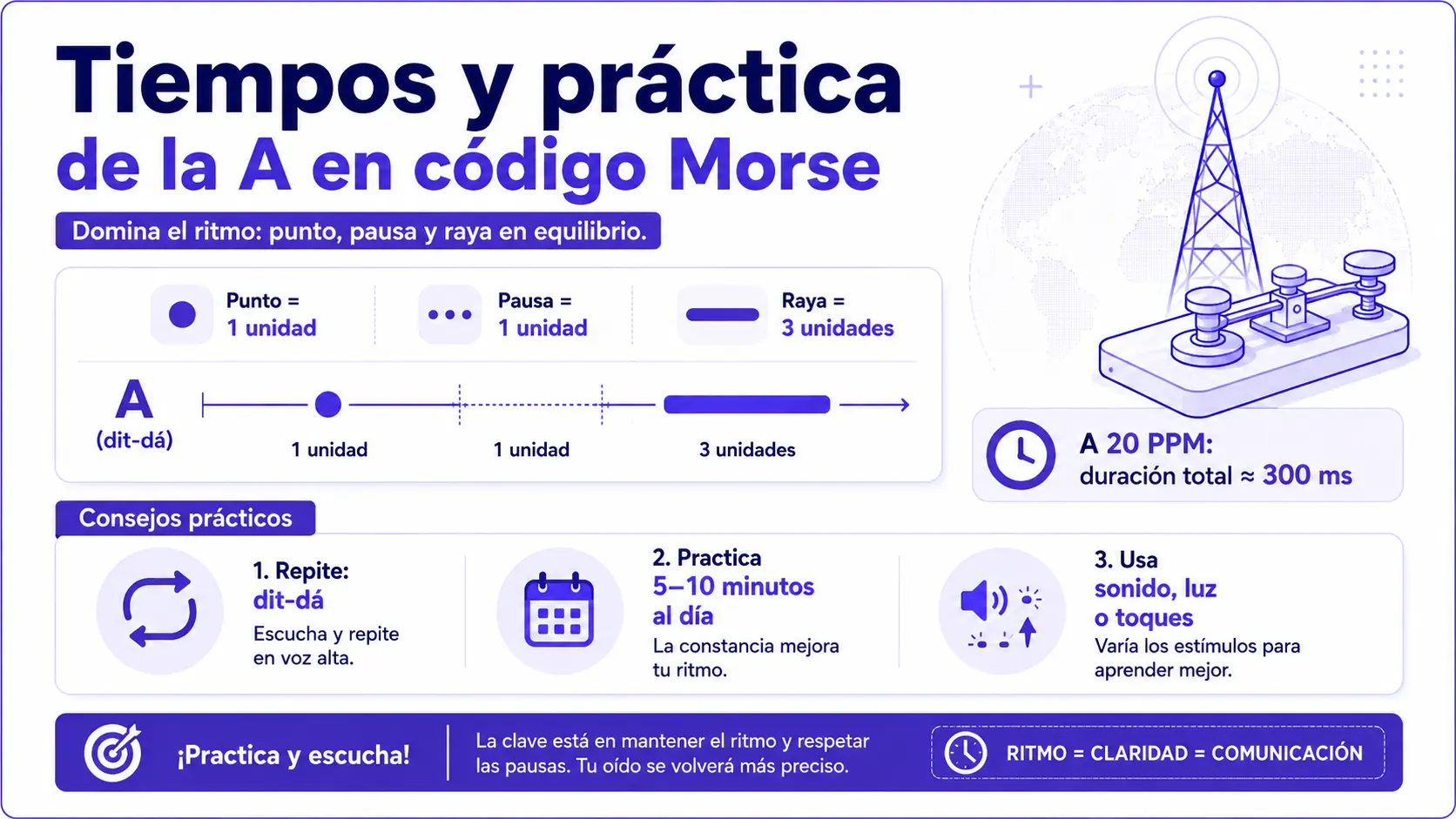
Timing is essential for accurate transmission. At 20 WPM, a dot is about 60 ms, the internal gap is about 60 ms, and the dash is about 180 ms, making the total duration of A roughly 300 ms.
| Element | Morse Code | Sound |
|---|---|---|
| Dot | 1 unit | dit — short beep |
| Gap within A | 1 unit silence | brief pause between elements |
| Dash | 3 units | dah — long beep |
Practice Tips to Master A in Morse Code
- Repeat the pattern aloud: say “dot, dash” or “dit-dah” several times while looking at · −.
- Practice with sound: listen to A and tap a short signal followed by a long signal.
- Use flashlights or finger taps: send A to a friend as one short flash and one long flash.
- Spell simple words: start with words like Ant, Air and Apple.
- Practice daily: 5 to 10 minutes of consistent practice is enough to reinforce memory.
How to Recognize A by Ear?
When you hear a short beep followed by a longer beep, remember the rhythm dit-dah. In Morse code, A is · −.
To improve recognition, use Morse code apps, listen to alphabet recordings, repeat the sound dit-dah and identify A inside longer messages.
Related Morse Code Guides
Frequently Asked Questions
Yes. A is one of the first letters beginners learn because it uses only one dot and one dash, the two basic elements of Morse code.
There is no definitive historical record confirming that A was specifically used in the first transmissions, but its simple two-signal structure has made it a standard early practice letter for a long time.
Beginners often mix up dot and dash duration, rush signals, skip regular practice, or ignore audio training. Keep the dot short and the dash about three times longer.
Start by writing A as · −, then listen to the dit-dah sound, practice with taps or flashes, and compare it with E (·) and T (−).
A appears in many words and can also appear in procedural signs, ham radio communication, and call signs, so it is a practical letter to recognize quickly.