What Is the Morse Code Alphabet?
The Morse Code Alphabet is a communication system that includes letters, numbers and symbols. The alphabet is the combination of short signals like dots (·) and dashes (−). Developed in the early 1840s by Samuel Morse and Alfred Vail for transmitting messages using telegraph lines.
Samuel Morse initially planned a system that used solely numbers. Then the operators used the special notebook to transcribe them into letters and words.
Morse originally hoped that messages could be decoded automatically and printed on paper. However, telegraph operators soon discovered that interpreting signals by ear was faster and more practical. You can practise that listening method with the Morse Code Audio Translator, using live tones or a clear recording.
Consequently, this number-based system was taking much time and was prone to errors. That’s why Morse’s close collaborator, Alfred Vail, devised a new alphanumeric code that used dots and dashes to represent letters. This development made Morse code reliable, easier, faster, and more practical for everyday communication.
Complete Morse Code Alphabet Chart (A–Z)
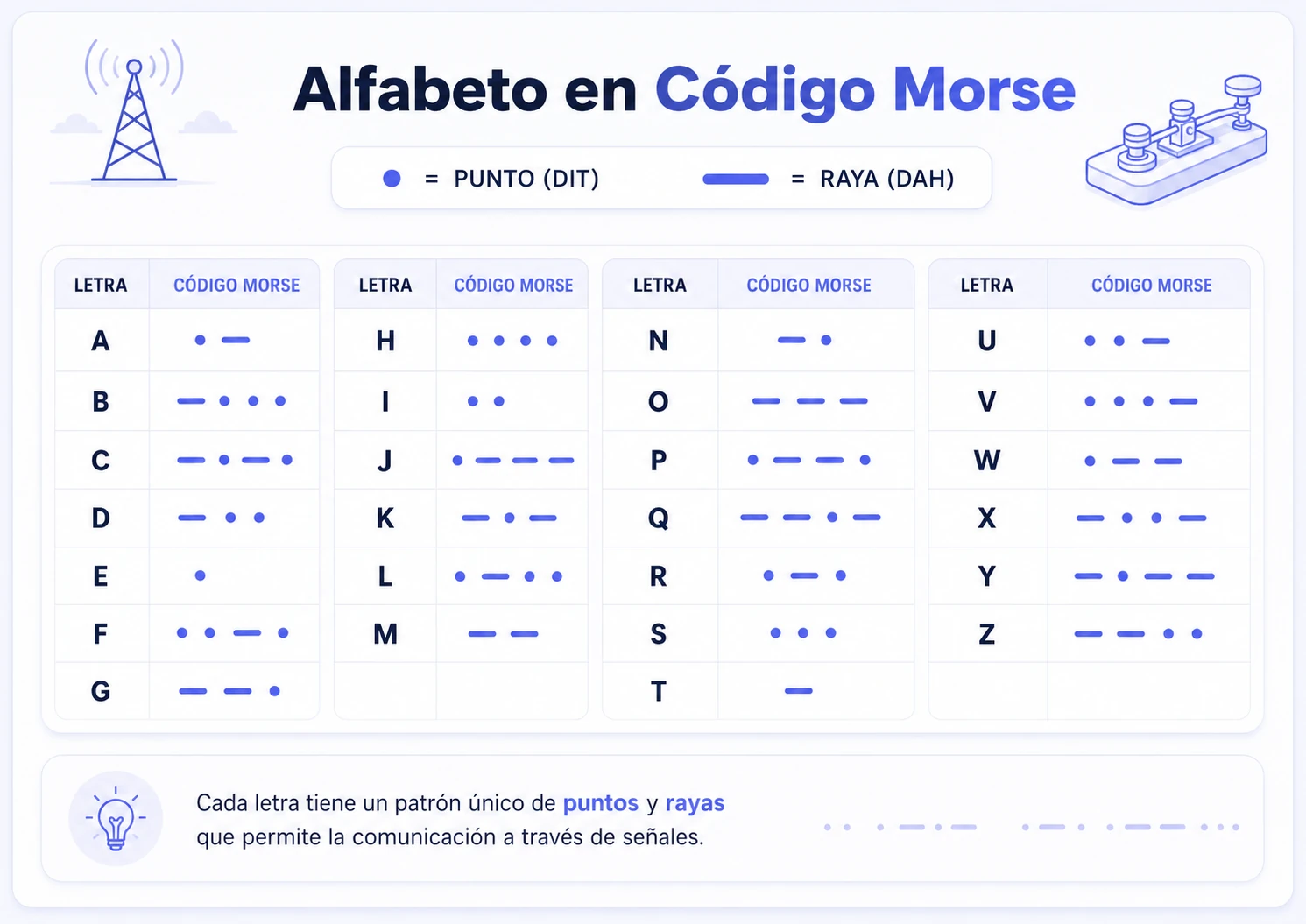
Following is the complete international Morse Code Alphabet Chart. Each letter is represented by a unique combination, including its sound pattern and the number of elements used for each letter. If you’re a beginner, this chart is useful to practice decoding messages or learn Morse code.
| Letter | Morse Code | Sound Pattern | Elements |
|---|---|---|---|
| A | · − | di-dah | 2 |
| B | − · · · | dah-di-di-dit | 4 |
| C | − · − · | dah-di-dah-dit | 4 |
| D | − · · | dah-di-dit | 3 |
| E | · | dit | 1 |
| F | · · − · | di-di-dah-dit | 4 |
| G | − − · | dah-dah-dit | 3 |
| H | · · · · | di-di-di-dit | 4 |
| I | · · | di-dit | 2 |
| J | · − − − | di-dah-dah-dah | 4 |
| K | − · − | dah-di-dah | 3 |
| L | · − · · | di-dah-di-dit | 4 |
| M | − − | dah-dah | 2 |
| N | − · | dah-dit | 2 |
| O | − − − | dah-dah-dah | 3 |
| P | · − − · | di-dah-dah-dit | 4 |
| Q | − − · − | dah-dah-di-dah | 4 |
| R | · − · | di-dah-dit | 3 |
| S | · · · | di-di-dit | 3 |
| T | − | dah | 1 |
| U | · · − | di-di-dah | 3 |
| V | · · · − | di-di-di-dah | 4 |
| W | · − − | di-dah-dah | 3 |
| X | − · · − | dah-di-di-dah | 4 |
| Y | − · − − | dah-di-dah-dah | 4 |
| Z | − − · · | dah-dah-di-dit | 4 |
Have you already learned the letters of the Morse Alphabet? Now try writing a romantic phrase like I Love You in Morse Code, one of the most popular expressions among beginners.
How Morse Code Letters Work
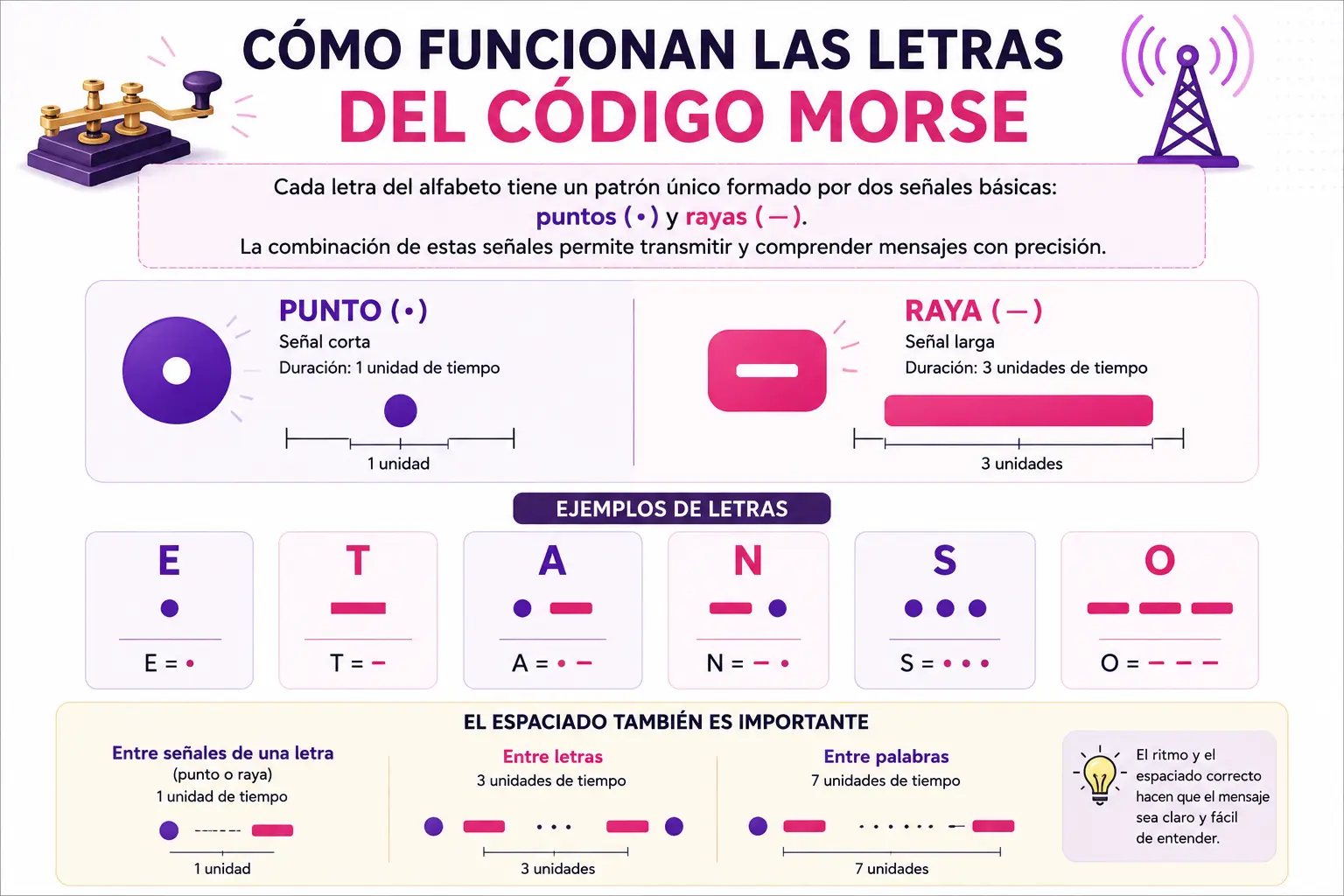
Every letter of the alphabet has its unique pattern of using two simple signals: dots (·) and dashes (−). This system looks simple, which follows specific timing and spacing rules to send and understand messages easily.
Dots and Dashes
Dots and Dashes are the foundation of Morse code. Each dot is a short signal, while a dash is three times longer than a dot. Their combination builds different letters.
For example:
E = ·
T = −
A = · −
N = − ·
S = · · ·
O = − − −
Character Spacing
There is a one-unit pause between dots and dashes within a character, which represents space. This spacing is as important as the signals themselves.
For instance, R (· − ·) comprises 3 signals separated by small gaps. Without these small gaps, it wouldn’t be possible to differentiate one signal from another.
Word Spacing
Words have longer pauses than letters in Morse Code. A much larger gap indicates the beginning of a new word.
HELLO WORLD
A noticeable gap between words like these helps the receiver to identify that they’re separate words of the message. Without this longer gap, the receiver may be confused when interpreting the message.
Timing Rules
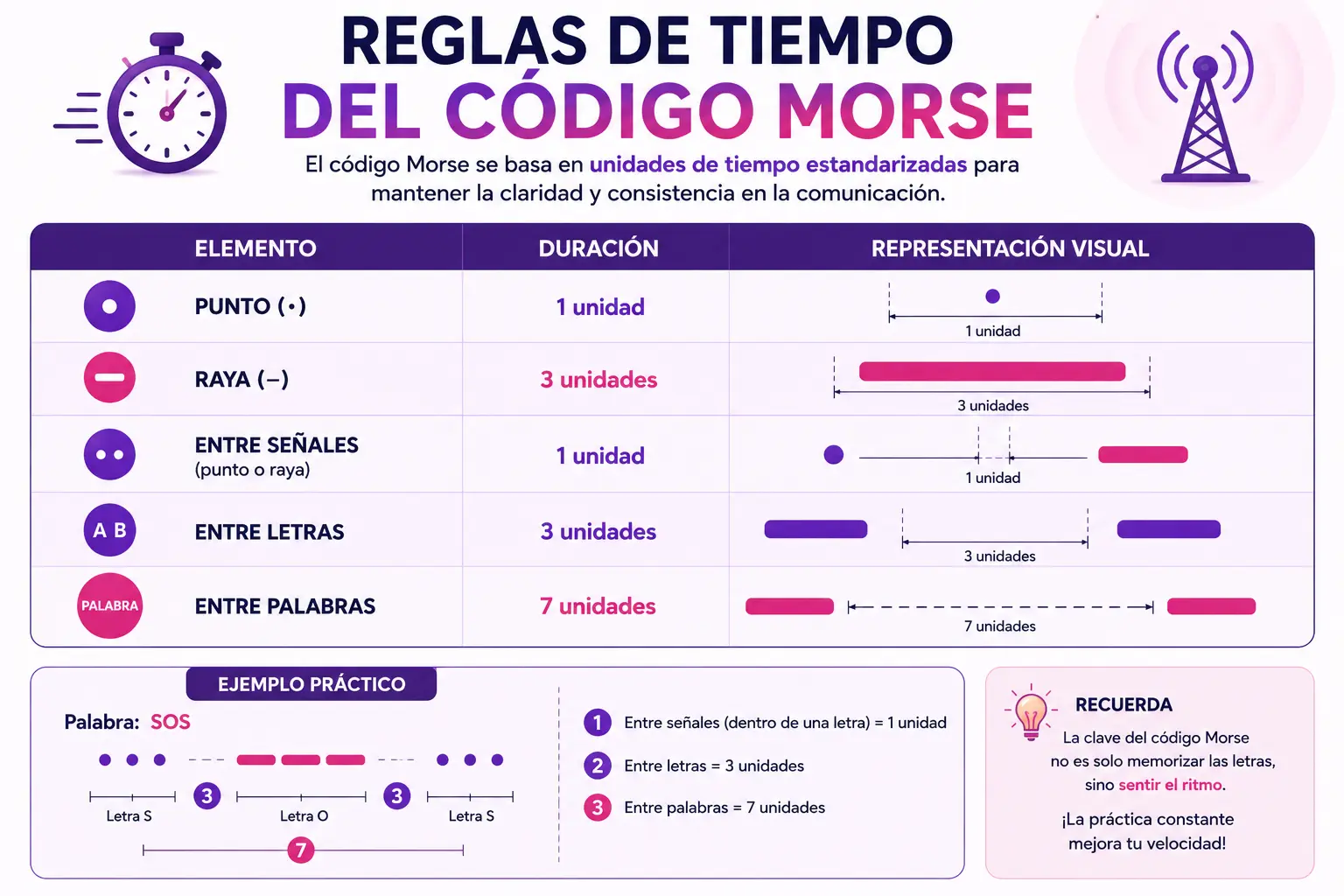
There are standard timing rules in Morse code to ensure consistency across all forms of communication. This complete system follows a single unit of time.
- A dot (·) = 1 time unit
- A dash (−) = 3 time units
- Space between parts of a letter = 1 unit
- Space between letters = 3 units
- Space between words = 7 units
For example, the letter A in Morse code (· −) consists of a dot, a short pause, and a dash. These timing rules make the Morse code clear and easy to decode, whether the message is received by light, sound, radio signals, or physical taps.
So, consistent timing played a key role in making Morse code more effective for almost two centuries.
International Morse Code vs American Morse Code
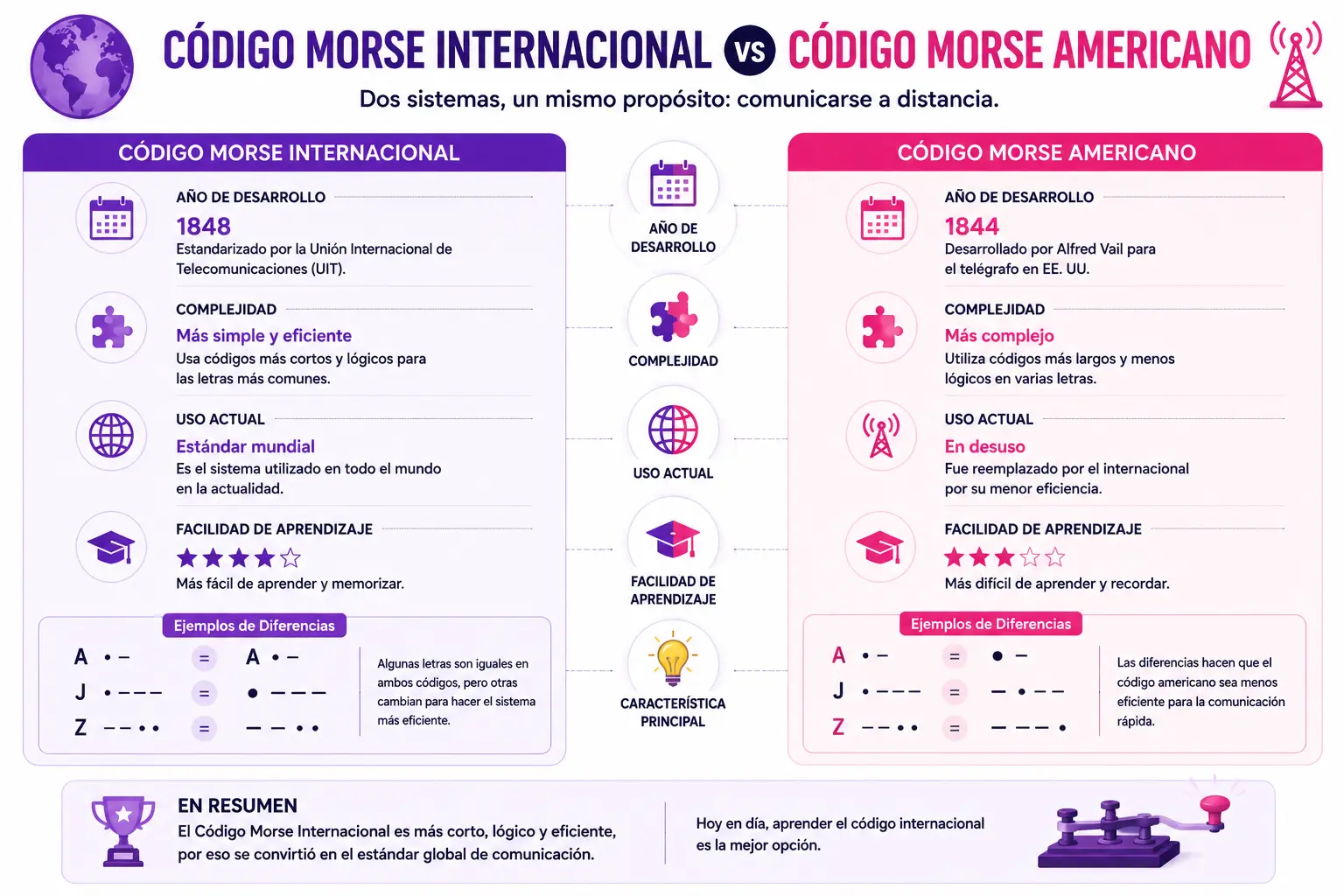
There are mainly two versions of Morse code: American Morse Code and International Morse Code. Although both these were developed during the early days of telegraph communication, they differ in terms of usage, complexity, and structure.
Key Differences
| Feature | American Morse Code | International Morse Code |
|---|---|---|
| Introduced | 1844 | 1848 |
| Also Known As | Railroad Morse Code | Continental Morse Code |
| Complexity | More complex signal patterns | Simpler and standardized patterns |
| Learning Difficulty | More difficult to learn | Easier for beginners |
| Signal Lengths | Variable lengths and spacing | Consistent timing rules |
| Primary Use | Early telegraph systems | Global communication standard |
| Accuracy | More prone to decoding errors | More reliable transmission |
| Modern Usage | Rarely used today | Widely used worldwide |
| Best For | Historical and railroad applications | Amateur radio, education, and modern Morse communication |
Which System Is Used Today?
In today’s world, International Morse Code is the standard system that is taught by amateur radio organizations. It’s recognized internationally for emergency signaling and communication training.
While American Morse Code is largely of historical interest which remained an important part of telegraph history.
So, if you want to learn Morse code, you should focus on the International Morse code because nearly all educational resources and modern operators use this version.
How to Learn the Morse Code Alphabet Fast
Initially, the Morse Code Alphabet may seem complicated, like learning a new language, but it becomes easier if the right approach is applied. The right techniques and consistent practice make recognizing letters much faster than expected.
Learn the Most Common Letters First
Instead of trying to memorize all 26 letters at once, start with the most often used letters in everyday language. The examples of the most common letters are A (· −), E (·), T (−), N (− ·), and S (· · ·), which are simple and easy to learn.
After learning these letters, you can create and decode basic messages much sooner. When it’s done, you can gradually move on to less common letters with longer patterns.
Learn by Sound Instead of Visual Memory
Mostly, beginners try to memorize the chart. However, Morse code experts often recommend learning Morse code by Sound. As, the Morse code is originally developed to be listened, so learning by listening to the rhythm of dots and dashes makes it more natural.
Suppose you listen to the audio recordings of Morse code letters and repeat them aloud. Over time, these patterns will automatically save in your memory, making decoding much faster.
Practice With Short Words
After learning a few common letters, start practicing with short and familiar words. This will add a sense of enjoyment by reinforcing your memory.
| Word | Morse Code |
|---|---|
| HI | .... .. |
| YES | -.-- . ... |
| NO | -. --- |
| CAT | -.-. .- - |
| DOG | -.. --- --. |
Use a Morse Code Translator
A Morse Code Translator can help you a lot in learning by instantly converting text into Morse code and vice versa. You can verify your answers and practice new letters and words whenever and wherever you want.
Further, the tool enables you to hear Morse code audio and enhance your understanding of letter patterns. If you want to practice in the best way, try our Morse Code Translator, which not only converts the text into Morse code but also allows you to listen to the audio, increase or decrease the speed.
Practice now with the translator
Convert English text to Morse code and listen to the audio signal.
Try the translatorMorse Code Memory Tricks for Every Letter
Trick #1: Easy Letters
Easy letters have short Morse code patterns, which makes them ideal to learn for newbies. These letters are also common in English and easy to learn within a few minutes of practice.
E = ·
T = −
A = · −
N = − ·
Learn these letters first because they are the foundation of many words and phrases.
Trick #2: Medium Letters
When you’ve learned the short letters, then move to medium letters. They have three signals and need a bit of extra effort.
R = · − ·
D = − · ·
K = − · −
G = − − ·
Trick #3: Hard Letters
Hard letters are more challenging than the short and medium, but regular practice makes them easier to learn.
Q = − − · −
X = − · · −
Y = − · − −
Z = − − · ·
These letters don’t used frequently in English, so beginners can learn them at the end.
Pro Tip
Focus on learning the easy letters first, then gradually move to medium and hard letters. This step-by-step approach will build confidence and make learning the Morse Code Alphabet much faster.
Common Mistakes When Learning Morse Code
Many people feel excited about learning Morse Code, but progress often slows over time because of common learning mistakes. The good news is that’s quite normal. These issues are easy to avoid when you keep them in mind.
Mistake 1: Memorizing Alphabetically
Many beginners try to learn Morse code like a traditional alphabet.
What happens?
- Slower recall speed
- Information overload
- Difficulty recognizing patterns
Solution:
Start with simple letters: E = ·, T = −, A = · −, N = − ·. Once you’ve done, then gradually add more letters.
Mistake 2: Ignoring Timing Rules
Many beginners ignore the rhythm of Morse code and just focus on the symbols. Always remember the timing rules:
| Signal | Duration |
|---|---|
| Dot (·) | 1 unit |
| Dash (−) | 3 units |
| Space between symbols | 1 unit |
| Space between letters | 3 units |
| Space between words | 7 units |
Even if you’re symbols like dots and dashes are fine, but the poor timing can disturb the meaning of your message.
Mistake 3: Practicing Too Many Letters at Once
Learning:
- 26 letters
- 10 numbers
- punctuation marks
- special symbols
All at one time will lead to frustration.
Instead:
Learn 3-5 characters at a time and practice them in real-world situations. Also, review them regularly to become proficient.
Mistake 4: Relying Only on Visual Charts
Many learners try to memorize dots, dashes, and symbols available on the charts without listening to actual Morse signals. The truth is that professional operators only recognize sound patterns.
To improve faster:
- Listen to Morse Code daily
- Practice decoding simple words
- Focus on rhythm rather than counting symbols
- Use a Morse Code Translator to check your answers
Keep your goal of recognizing Morse code naturally, rather than memorizing the pattern perfectly.
Morse Code Alphabet PDF & Printable Chart
Searching for a quick reference that you can use anytime? Our Printable Morse Code Alphabet Chart includes all letters from A to Z, along with their corresponding Morse code patterns. Whether you're a beginner learning the foundation or an experienced enthusiast who sometimes needs a handy reference, this chart can help you practice more effectively.
Benefits of the Printable Chart
- Easy to download and print
- Perfect for offline learning
- Includes the complete Morse Code Alphabet (A–Z)
- Useful for classrooms, radio operators, and self-study
- Quick reference for decoding and encoding messages
Many learners find it easier to memorize Morse code when they keep a printed chart nearby during practice sessions. In addition, having a physical reference can help reinforce letter recognition and improve recall speed over time.
Download the printable Morse Code Alphabet PDF below and start practicing anywhere, even without an internet connection.
Download PDF Alphabet Chart
Save or print the Morse code alphabet chart for offline practice.
Download PDFMorse Code Numbers (0–9)
Although the Morse Code Alphabet mainly refers to letters A–Z, many learners also want to know how numbers are represented. The table below shows the Morse code patterns for digits 0 through 9.
| Number | Morse Code |
|---|---|
| 0 | ----- |
| 1 | .---- |
| 2 | ..--- |
| 3 | ...-- |
| 4 | ....- |
| 5 | ..... |
| 6 | -.... |
| 7 | --... |
| 8 | ---.. |
| 9 | ----. |
Frequently Asked Questions
The Morse code alphabet is a symbolic system that represents symbols, letters, and numbers using a series of short and long signals. Each character has a unique pattern, which allows messages to be transmitted through light, radio, signals, sound, or other means of communication.
International Morse code has 26 letters, from A to Z. Moreover, it includes codes for numbers, punctuation marks, and several special symbols used in communication.
Today, most countries use the International Morse Code, which is recognized as the global standard. In the past, American Morse code was used, but today the International system has largely replaced it.
The easiest Morse code letters are E (·) and T (−) because each consists of only a single signal. For this reason, they are usually the first characters taught to beginners.
There’s not single officially agreed upon “hardest” letter, but many learners and enthusiasts find some letters like Q (− − · −), X (− · · −), and Y (− · − −) more challenging because they contain longer and more complex signal patterns.
Yes, you can memorize the basic visual alphabet within a week if you practice consistently. However, to actually hear, comprehend, and fluently read it at conversational speeds usually takes several weeks or months of regular practice.
The key difference between Morse letters and Morse numbers lies in their length, structure, and composition. Morse number (0-9) patterns are generally longer than Morse letters (A-Z). Letters have 1-4 signals, and numbers are exactly 5 signals long.
You’ve multiple options to learn it online, like online training, translators, interactive quizzes, listening exercises, and training tools. Our Morse Code Translator can also help you to start, allowing you to convert text into Morse and vice versa, and improve your Morse code skills through regular exercise.