About Morse Code Translator
We build clear tools and educational resources that help anyone translate, hear, practise, and understand Morse code in a web browser.
What Morse Code Translator is
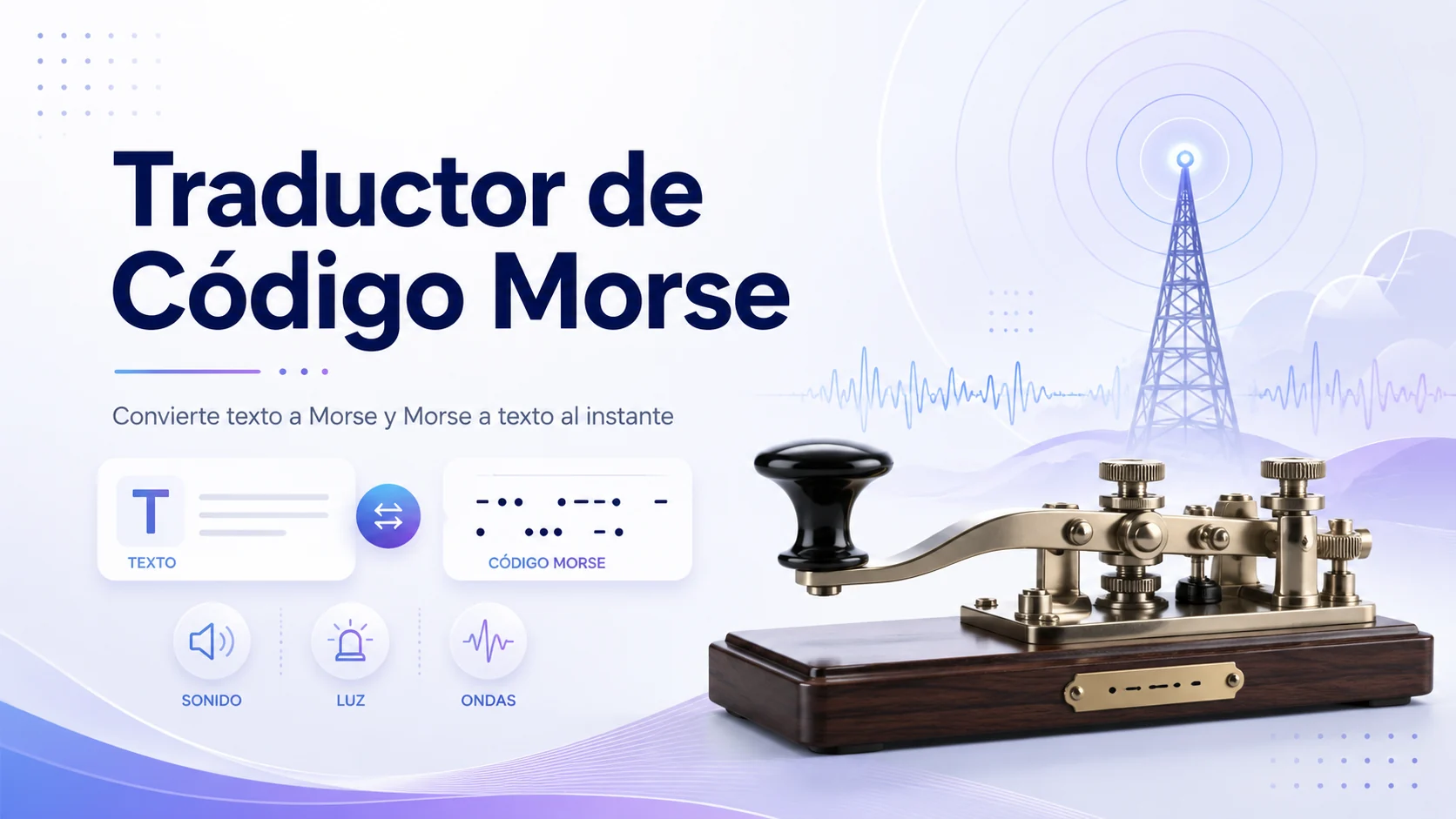
Morse Code Translator is an independent educational project focused on Morse code. Its main tool converts ordinary text into dots and dashes and decodes Morse sequences back into text. We also publish reference charts, exercises, examples, and learning guides for students, teachers, radio enthusiasts, creators, and readers interested in communications history.
Our aim is to provide a practical experience rather than a page of unexplained technical terms: enter a message, view the result, listen to its rhythm, compare characters, and continue learning through related explanations. For standard text translation, processing is designed to take place locally in the browser whenever technically possible.
Our mission
We want Morse code to be easier to explore without compulsory accounts, payments, or unnecessary steps. Three priorities guide the project:
Practical value
Every tool and article should help a visitor complete a real task: translate, verify, listen, practise, or learn.
Clarity and accuracy
We explain patterns in plain language, distinguish educational use from professional use, and correct issues reported to us.
Responsible access
Core content remains freely available and pages are designed to work on computers, tablets, and phones.
What you can find on the site
Text translator
Convert supported letters, numbers, and punctuation between ordinary text and International Morse code.
Open the translatorImage translator
Interpret visible dot-and-dash patterns in images, with guidance on image quality and compatible formats.
Try the toolAudio and visual signals
Hear Morse timing and view visual representations that support different ways of learning.
Step-by-step guides
Explore practice methods, spacing rules, beginner tips, and a structured learning plan.
Read the guideReference charts
Quickly check the alphabet, numbers, and common examples without memorising everything at once.
View the alphabetSpanish and English content
Separate language versions help each page read naturally and remain easy to navigate.
Leer en españolWho the site is for
The resources are designed for people with different levels of experience. No previous knowledge is required to begin.
- Beginners learning the Morse alphabet
- Teachers looking for classroom examples
- Students preparing activities or projects
- Radio enthusiasts reviewing basic patterns
- Creators using Morse in designs or messages
- Readers interested in history and telecommunications
How we create and review content
We aim for every page to fulfil the promise of its title and provide more value than a short definition. Our editorial process includes:
- Define the purpose: identify what the visitor needs to solve or learn.
- Check the patterns: review letters, numbers, punctuation, spacing, and examples against International Morse conventions.
- Test the tool: check representative results and review behaviour on different screen sizes.
- Edit for clarity: remove repetition, explain terminology, and add examples where they improve understanding.
- Maintain and correct: update pages when we find an issue or receive useful feedback from readers.
Morse code includes historical variants, abbreviations, prosigns, and specialist conventions. Where a difference may affect interpretation, we try to explain it. Even so, independently verify any result intended for technical, professional, or safety-related use.
Privacy, accessibility, and user experience
We design the site so core functions are easy to find, controls use clear labels, and content remains readable on mobile devices. Standard text conversion is processed in the browser whenever possible. Users should never enter passwords, financial information, private medical details, or confidential messages into an online tool.
Our data, cookie, and advertising practices are explained in the Privacy Policy and Cookie Policy. You can also revisit your choices through the permanent Cookie settings link in the footer.
Funding and editorial independence
The site may be supported by advertising so its tools and learning resources can remain free. The appearance of an advertisement does not mean we endorse the advertiser or allow it to control our explanations, examples, or editorial decisions. We aim to keep a clear separation between content, tool controls, and advertising areas.
We do not sell positions in our reference charts, alter Morse results to favour third parties, or allow an advertiser to dictate the conclusion of an article.
Corrections, questions, and suggestions
If you find an incorrect translation, broken link, accessibility problem, or explanation that could be clearer, please tell us. Include the page URL and a specific example so we can investigate efficiently.