Morse code is a timeless and flexible system of communication that uses sequences of dots and dashes. If you're a beginner or curious enthusiast and want to learn Morse code, start the learning by saying the greeting word Hello in Morse code. It opens the door to this historic system of communication over long distances. Hello in Morse code is a common and friendly word that teaches the basic rhythm of dots, dashes, and spacing.
This blog explains what Hello is in Morse code, how to say it, and how to send it using various signals, along with practical uses and common mistakes that can cause decoding errors.
What is Hello in Morse Code?
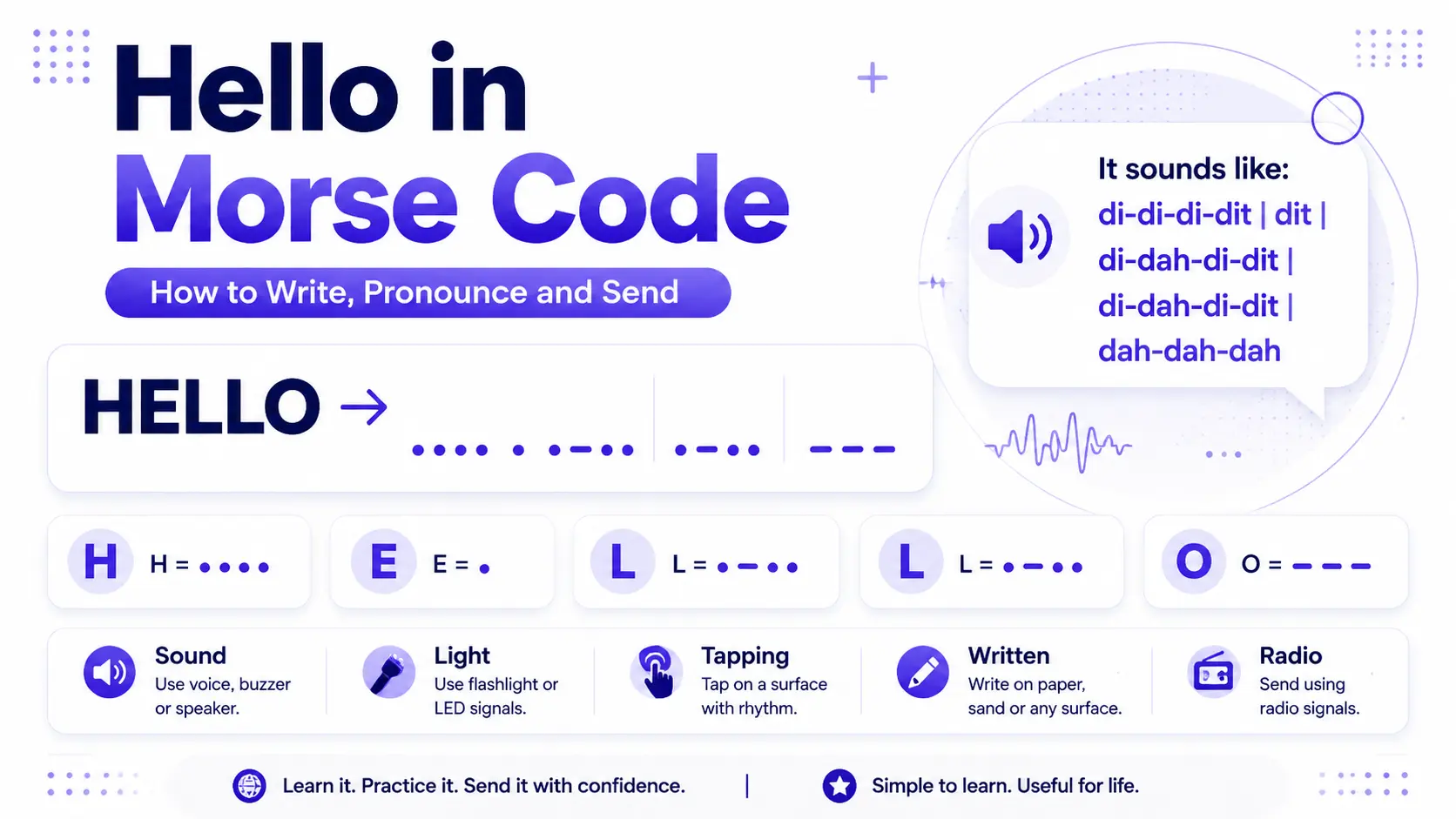
Hello in Morse code is one of the best words for beginners. It has five letters: H has four dots, E has one dot, L has dot-dash-dot-dot, and O has three dashes. This pattern teaches both dot-and-dash combinations and letter spacing.
Hello is a natural greeting word. Its visual representation is .... . .-.. .-.. ---. Each letter has its own unique pattern, and the word contains 16 Morse signal elements in total. Remember that these dots and dashes are transmitted using standard International Morse Code spacing rules.
| Letter | Morse Code |
|---|---|
| H | .... |
| E | . |
| L | .-.. |
| L | .-.. |
| O | --- |
| HELLO | .... . .-.. .-.. --- |
How Do You Say Hello in Morse Code?
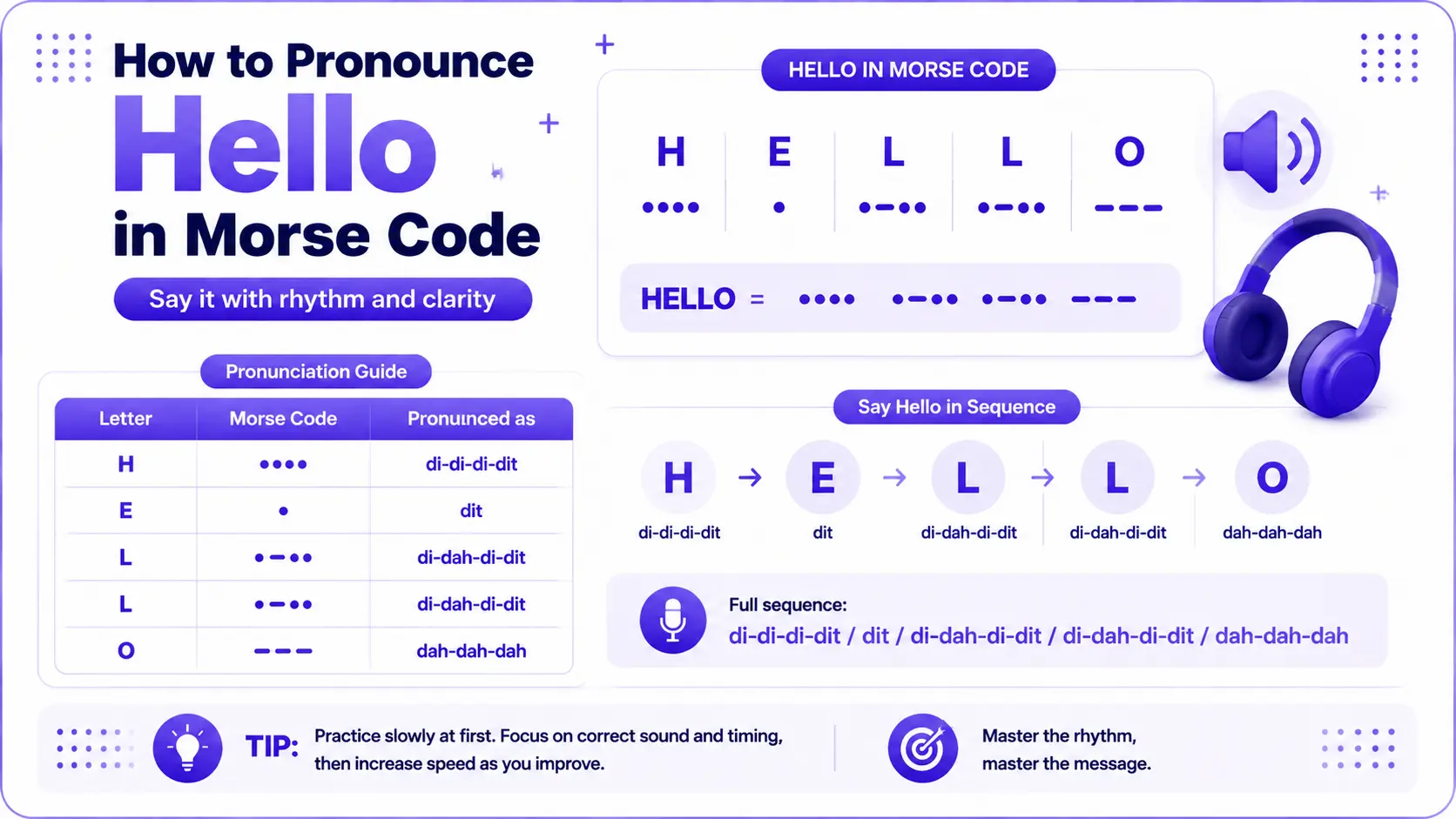
Radio operators use dit and dah sounds instead of saying dot and dash. When you verbalize each letter using dit and dah, it sounds like this:
| Letter | Morse Code | Sound |
|---|---|---|
| H | .... | di-di-di-dit |
| E | . | dit |
| L | .-.. | di-dah-di-dit |
| L | .-.. | di-dah-di-dit |
| O | --- | dah-dah-dah |
In the sequence of Hello: di-di-di-dit / dit / di-dah-di-dit / di-dah-di-dit / dah-dah-dah.
When you are learning Hello, master the pronunciation and rhythm before moving on to longer phrases. This familiar greeting word is more complex than the casual word Hi in Morse code.
How to Transmit Hello in Morse Code
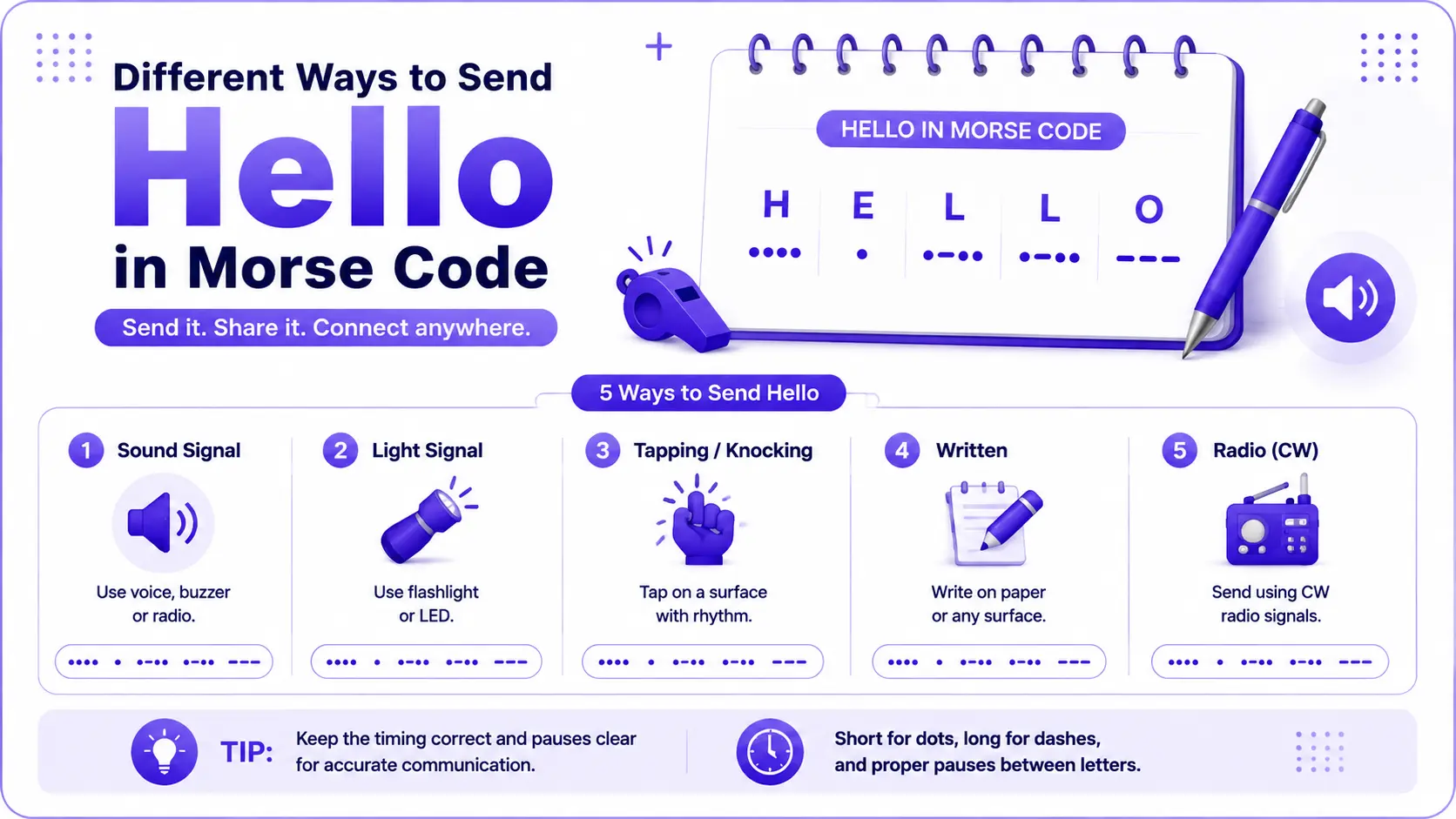
There are several ways to master the Morse code pattern and send the message. But, the signal sent clearly that should be recognized and decoded into an accurate message.
1. Sending Hello with Sound
Sound is one of the most common ways to communicate Morse code. This method is especially useful for amateur radio enthusiasts and for practice exercises. You can use a whistle, a vehicle horn, a radio transmitter, a bell, or a mobile phone speaker. Pro tip for sound practice: Start slowly for accurate decoding and gradually increase speed as you become more comfortable.
2. Sending Hello with a Flashlight
Light signals can be useful at night or in low-visibility environments. You can use short flashes for dots and long flashes for dashes. You can use a flashlight, a headlamp, vehicle headlights, or a mobile phone torch. Make each flash clearly visible, leave the correct pause, and follow the timing rules between letters to avoid confusion.
3. Sending Hello Through Tapping or Knocking
A Morse code message can also be practiced or sent through physical taps. Use short taps for dots and longer or more emphasized taps for dashes. You can tap on a table or desk, walls, doors, pipes, or metal surfaces. Tapping Example for Hello:
- H (....) → Tap four times rapidly
- E (.) → Tap once
- L (.-..) → Tap short, long, short, short
- L (.-..) → Repeat
- O (---) → Tap three long times
4. Writing Hello on Paper or Visible Surfaces
You can also write Hello in Morse code on different surfaces, such as paper or cardboard, sand or snow, painted signs, fabric or clothing, or ground markers. Write it as: .... . .-.. .-.. ---
5. Blinking Hello in Morse Code
Blinking can be used as a visual practice method when both people understand the timing. Use short blinks for dots and longer blinks for dashes. Blinking Example for Hello:
- H (....) → Blink four times quickly
- E (.) → Blink once
- L (.-..) → Blink short, long, short, short
- L (.-..) → Repeat
- O (---) → Blink three long times
Morse Code Hello in Various Languages
International Morse Code uses standardized patterns for supported characters and the greetings words Hello can be translated into different languages. Here are a few examples:
- Spanish: "Hola" → .... --- .-.. .-
- French: "Bonjour" → -... --- -. .--- --- ..- .-.
- German: "Hallo" → .... .- .-.. .-.. ---
Why Learning “Hello” in Morse Code Matters
Learning how to say Hello in Morse code is useful because it builds basic skills in this communication system. It’s a good phrase to add to your practice vocabulary. You can learn Morse code for a hobby, education, radio practice, or creative projects. For this purpose, understand the code structure of Hello that provides a foundation for individual letters which create a meaningful message.
- Intro to Morse: Knowing Hello in Morse code expands your Morse code vocabulary.
- Creative Communication: Say Hello with different signals such as sound, tapping, knocking, blinking, or writing.
- Amateur Radio: Beginners can practice short and simple greetings to improve signal clarity and timing.
- Historical Learning: Morse code has an important history in long-distance, maritime, and military communication.
- Fun and Creativity: Sending Hello in Morse code can be a fun coded greeting for friends.
- Games and Puzzles: Hello can be used in puzzles, classroom activities, and speed-tapping games.
Using Our Morse Code Translator Tool to Send Hello
Our Morse Code Translator Tool provides a simple way to learn and practice the code. Just follow these steps:
- Type Hello in the input box.
- The Morse code appears as: .... . .-.. .-.. ---
- Play the audio and listen to the sound of the dots and dashes.
- Copy and share the code for messaging practice.
- You can then practice the same pattern with tapping, blinking, writing, or flashlight methods.
List of Common Morse Code Words
Common Mistakes
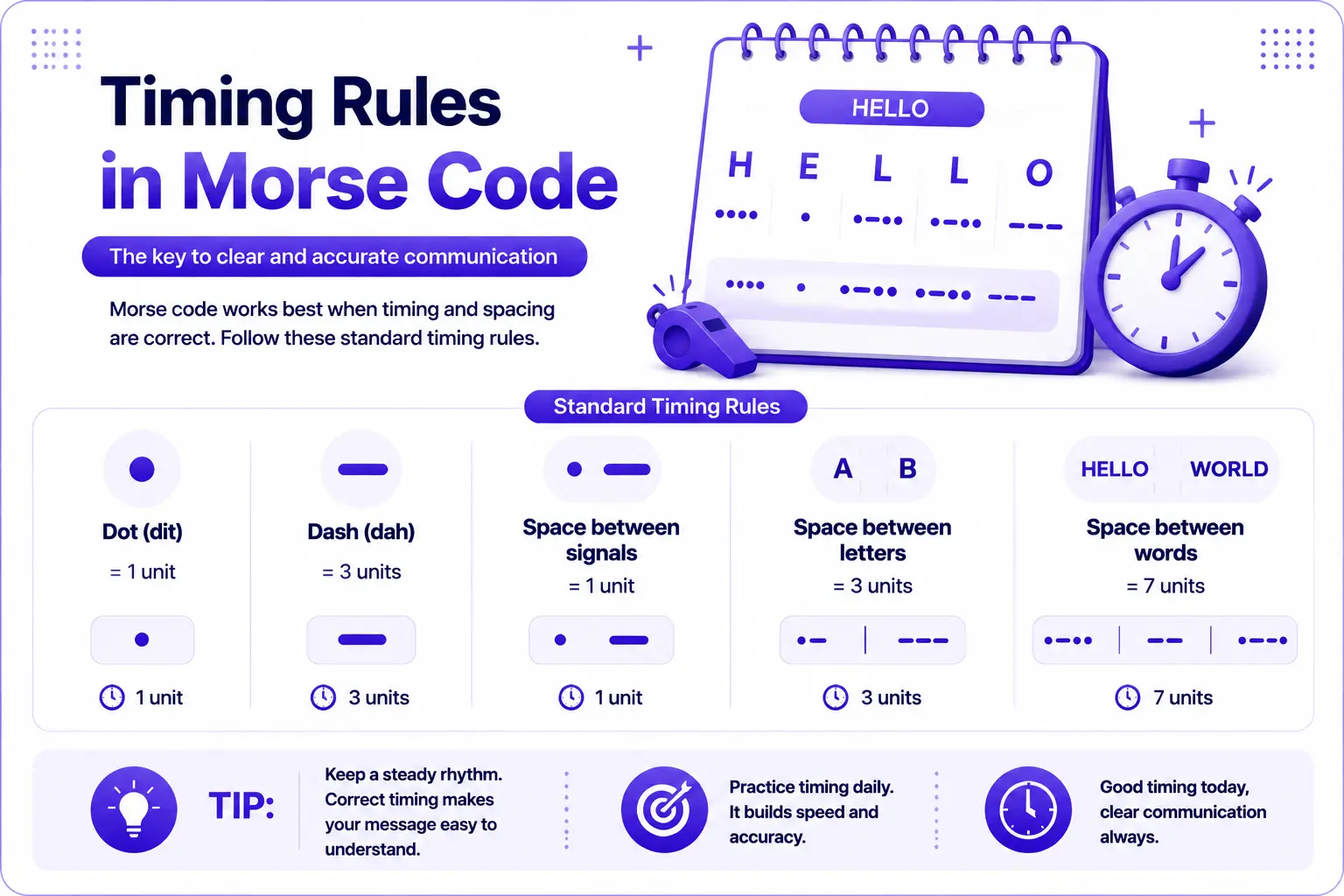
A common mistake is sending the wrong pattern or using incorrect spacing between letters. Count the dots carefully and send four dots for H, not five. Also avoid rushing the signals, confusing the three separate dashes of O with one long mark, and skipping regular practice.